
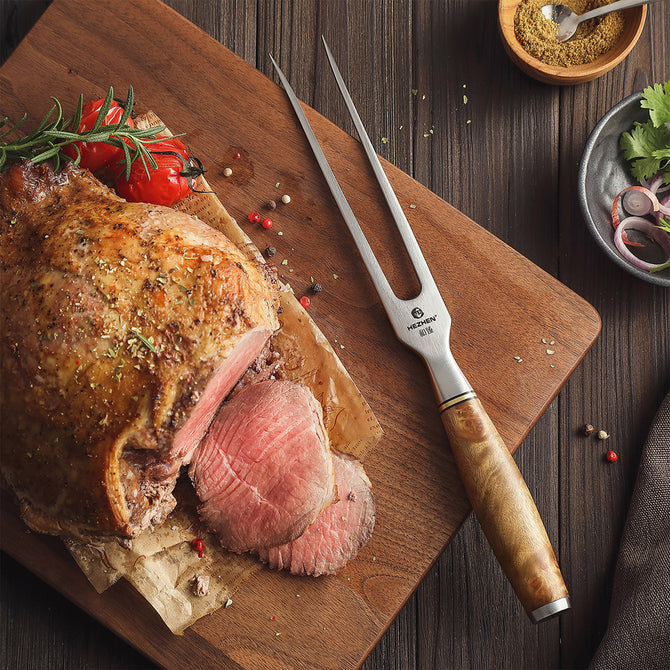
Choosing the right meat fork is essential for any culinary enthusiast or professional chef looking to enhance their cooking skills. A well-designed meat fork is not just a tool but an extension of the chef’s hands, allowing for the perfect hold and grip on meats during carving, serving, and even cooking. With numerous options available, selecting the right meat fork can be daunting, but understanding the key features and types can guide you in making an informed choice for your culinary needs.
Understanding the Types of Meat Forks
Meat forks come in various styles, each designed for specific purposes in the kitchen. Here are the primary types to consider:
- Carving Forks: Essential for holding meat steady while carving, these forks typically feature two long, sharp tines that penetrate the meat securely. They are ideal for use with large roasts or turkeys. Learn more in this detailed guide.
- Serving Forks: These are generally larger and designed for serving portions of cooked meat. They often have a more decorative design and may feature additional tines for better grip.
- Cooking Forks: Typically used for turning and lifting meat during cooking, these forks are durable and designed to withstand high temperatures. They are often used for grilling and frying.
Key Features to Consider
Material and Durability
The material of a meat fork is crucial for its durability and performance. Stainless steel is a popular choice due to its rust resistance and strength. Alternatively, some might prefer a fork with wooden handles for better grip and comfort. Each material has its benefits, so consider your specific needs when choosing. Explore further insights here.
Handle Design
The handle of a meat fork should offer a comfortable grip to ensure control and precision. Ergonomically designed handles reduce hand fatigue, especially useful during prolonged use. Some handles are textured or contoured to enhance grip, providing additional safety and ease of use.
Length and Tine Design
The length of the meat fork should be proportionate to its intended use. Longer forks offer better reach into ovens or grills, while shorter ones provide more control for carving tasks. The tines should be sharp and sturdy to penetrate meat easily without causing damage. Consider the design and spacing of the tines, as these factors influence the fork”?s effectiveness. Find additional information here.
Choosing Based on Usage
Consider how often and in what context you will use the meat fork. For instance, a professional chef might require a high-quality carving fork for regular use, while a home cook might prioritize versatility and opt for a multi-functional fork. Also, think about the types of meat you frequently prepare, as this will influence the ideal length and design of the fork for your needs. Read more about this topic.
Care and Maintenance
Proper care and maintenance of your meat fork extend its lifespan and ensure consistent performance. Here are some tips:
- Always hand wash your meat fork with mild soap and warm water to prevent damage from harsh dishwasher detergents.
- Dry the fork immediately after washing to prevent rust and maintain the integrity of the material.
- Store the fork in a safe place, preferably in a knife block or case, to avoid dulling the tines or damaging other kitchen utensils.
Understanding the various types and features of meat forks can significantly enhance your culinary experience. By selecting the right tool, you ensure precision, safety, and efficiency in your cooking endeavors. Whether you are a professional chef or a home cook, a well-chosen meat fork can be an invaluable addition to your kitchen toolkit. Explore further insights here.